Who Is Actually Teaching Leaders How to Lead Transformation?
We are spending a lot of time talking about AI capability.
Who needs to learn prompting? Which roles will change? What agents should we deploy? What skills will employees need? How do we get people onboard?
Those are important questions.
But I think there is a much bigger capability gap emerging inside organizations:
Who is teaching the leaders responsible for transformation how to actually lead transformation?
Think about what is happening right now.
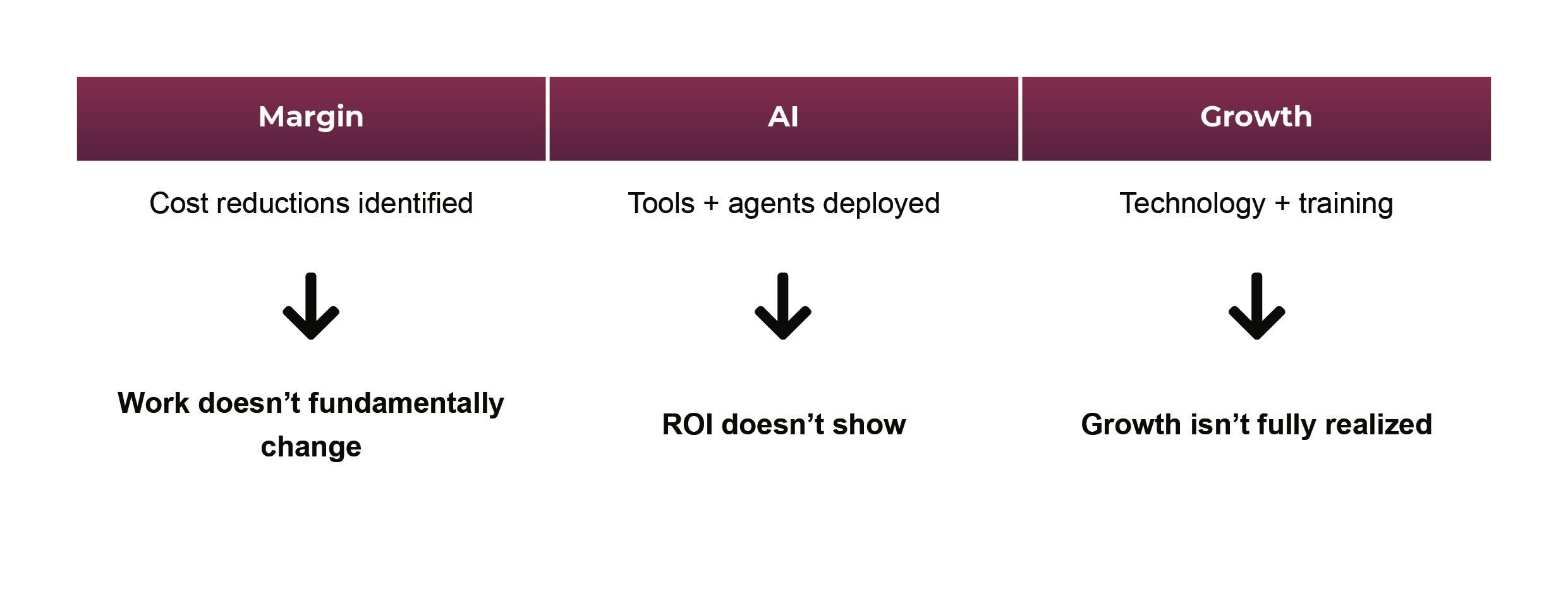
Each initiative makes sense independently, but transformation doesn't happen independently.
Technology changes workflows. Workflows change roles. Roles change capability requirements. New capabilities affect structure and accountability. All of it affects leadership, culture, employee experience and ultimately whether the promised business value ever materializes.
And all of that assumes the technology being implemented was solving the right problem in the first place.
Deploying the solution is not the same as transforming the business.
And this is where Talent teams have an enormous opportunity.
What if transformation capability became part of the Talent strategy?
Instead of only asking, “What skills does our workforce need?” I would add another question:
Which leaders are accountable for our most important transformations — and have we equipped them to lead those transformations successfully?
Imagine identifying a functional or transformation leader in each critical area of the business and developing them against a real transformation they already own.
They learn how to:
Crystallize the value and outcomes the transformation must create;
Redesign the operating system required to deliver that value;
Mobilize leaders, teams and employees around the new way of working; and
Demonstrate measurable business results.
Not through a hypothetical case study. Through the actual work.
Now leadership development, workforce strategy and transformation aren't separate conversations.
The development experience itself creates business value. And what’s more exciting, Talent has a much stronger answer to a question we have struggled with for years: What business impact did our investment actually create?
This becomes even more important with AI
One of the questions I keep hearing from Talent leaders is: What exactly should Talent own?
IT and AI Centers of Excellence absolutely have roles to play in technology, governance, infrastructure and deployment.
But deploying AI is not the same as building an organization capable of creating value with AI.
Someone still has to work through:
What work should fundamentally change?
What value should that create?
What should humans continue doing?
What capabilities become more important?
How should roles, workflows and accountabilities change?
What leadership behaviors will make the new model work?
And how will we know whether any of this actually produced the promised ROI?
Those are transformation questions. And they sit right at the intersection of business strategy, work, workforce and leadership.
That intersection is where Talent can play a much bigger role.
The next frontier of leadership development
For years, organizations have developed leaders around strategy, communication, coaching, influence and change leadership. Those capabilities still matter.
But look at what leaders are increasingly being asked to do:
Transform a function. Redesign this operating model. Generate ROI from AI. Take cost out without destroying capability. Build a new way of working.
These aren't simply leadership challenges. They are transformation challenges.
And most leaders have never been systematically taught how to lead them. This is the opportunity I see for leadership development.
Build leaders who can architect transformation
Leaders who can take a strategic priority and move it from ambition, to operating reality, to measurable results. Organizations are not short on transformation initiatives, however, they’re short on people who know how to transform well.
Building transformation capability deliberately
I spent much of my corporate career sitting at the intersection of Talent, Culture, operating model and enterprise transformation.
After years of navigating, leading and architecting transformation, one thing became increasingly clear to me:
Transformation is not simply something organizations need to manage. It is a capability people need to learn.
That belief is what led us to build The 4D Development Pathway.
The Pathway develops transformation capability at different levels of the organization — from people learning to create value as their own work changes, to leaders mobilizing teams through transformation, to practitioners redesigning work, to transformation architects leading complex enterprise efforts.
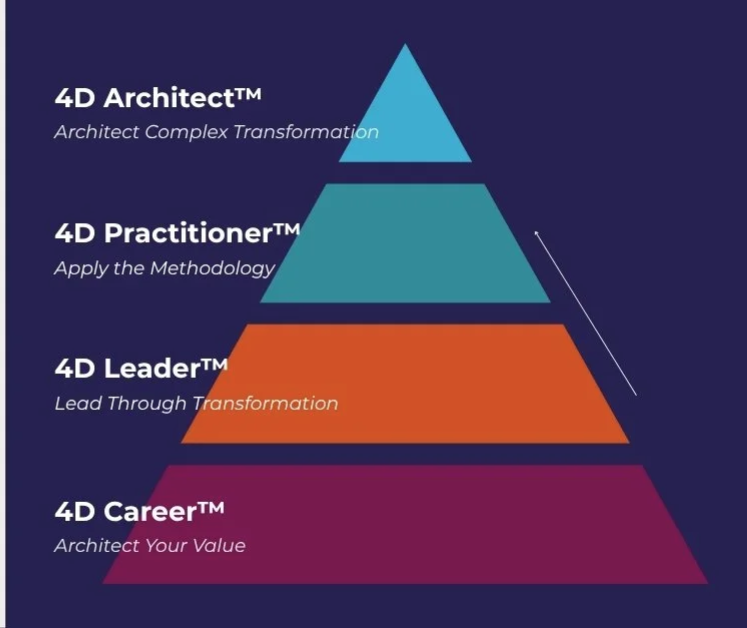
The premise is simple:
Don't just teach people about transformation. Develop them through the transformations the business already needs to deliver.
As transformation becomes part of more people’s jobs, the ability to transform cannot sit only with a transformation office, a consulting firm or a small group of change practitioners. It has to become an organizational capability.
And I believe Talent has an enormous opportunity to help build it.