The evolving role of a people leader.
There is a misconception about high performance that we need to challenge.
We often assume that if we hire superstars, set ambitious targets, and demand more, extraordinary results will follow.
On the other side of the pendulum, we want to provide our teams with autonomy and self-reliance, particularly when we know they are strong performers. But the risk is becoming so hands-off that we leave people to figure things out on their own, without enough connection to the broader strategy, coordination across the team, or support to continue growing and improving.
After seeing and living through both approaches, I have learned that improving team performance requires us, as leaders, to intentionally architect the conditions for our people to succeed.
The reality is that great people alone don't guarantee great performance.
I learned this firsthand.
Several years ago, I became the leader of a team whose employee engagement ranked in the 32nd percentile against Gallup's benchmark.
Three years later, that same team reached the 99th percentile.
Now, you might think this is a story about employee engagement. But it is much more than that.
During those three years, we exceeded every goal and performance measure we had established as a team. Our M&A-related goals, our organization's overall engagement, the feedback and impact of our leadership development programs, and the evolution of performance management across the enterprise. We were delivering results that exceeded our expectations.
And none of this happened in a stable environment.
During those years, our company went through massive transformation. We experienced multiple CEO and CHRO transitions, a corporate spin-off, changes in ownership, and eventually becoming a publicly traded company.
With every transition came a new set of expectations, shifting priorities, and an opportunity to rethink what value we needed to create.
We couldn't just continue doing what we had always done.
I had to continuously reassess our priorities, rethink how work was designed, identify what capabilities we needed, help the team adjust to new expectations, and measure whether our efforts were making a difference.
Sometimes that meant stopping work we had invested significant time in. Sometimes it meant rethinking roles, redesigning processes, building new capabilities, or challenging how we had approached something in the past.
It wasn't always easy, change never is. It takes effort, tough decisions and recommitment from all stakeholders. But I saw firsthand what happened when we created the conditions for talented people to succeed, even as everything around us continued to change.
I also learned that this wasn't something I could design once and consider done.
Toward the end of my tenure, as I prepared to leave, I found myself stepping back from some of that longer-term re-architecting. It made me reflect on how intentional this work had been and how important it is to build the capability for teams to keep evolving, regardless of who is leading them.
That experience reinforced something I believe deeply.
The impact a leader has on team performance is often underestimated.
The role of a people leader is changing.
For years, leadership development has placed significant emphasis on interpersonal and managerial capabilities. How to delegate, give feedback, manage conflict, coach, motivate, and engage people.
And rightly so. These capabilities are critical.
But they aren't enough on their own.
With the pace of digital disruption, AI, and constantly shifting business priorities, leaders need to do more than manage people effectively.
Think about it. What happens when technology changes the work your team does? When capabilities become outdated? When business priorities shift, and the processes and roles you've relied on no longer deliver the value the organization needs?
Giving better feedback won't solve all of that. Neither will hiring another superstar.
We, as people leaders, need to develop the capability to transform our team's performance.
What does it take to architect performance?
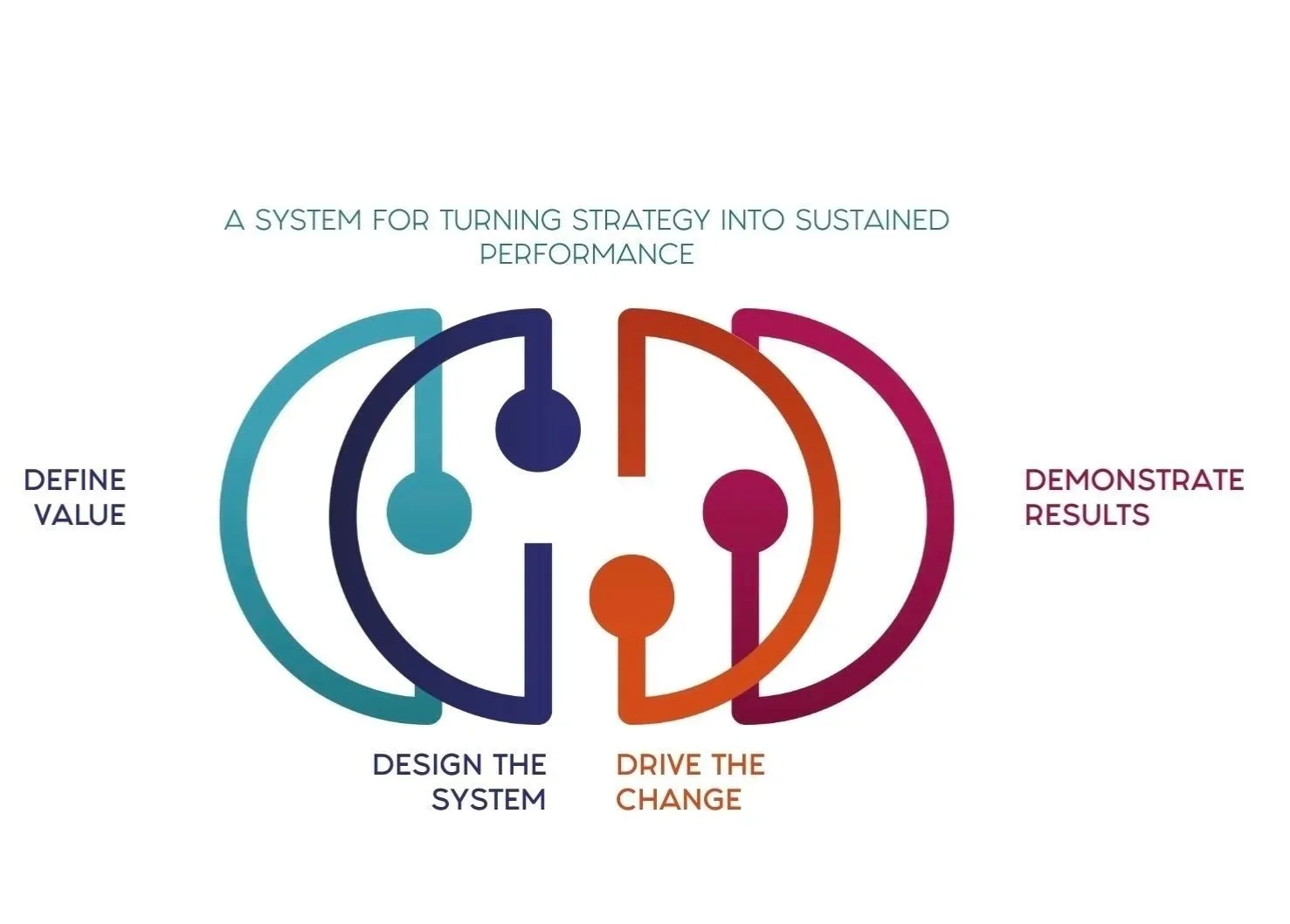
Throughout my career, I've applied this thinking to how I lead teams and navigate organizational transformation. It's also at the heart of the 4D Transformation System™.
I believe people leaders need to strengthen four fundamental capabilities:
1. Define Value — Does my team know what matters?
Can every person on your team connect their work to the outcomes the organization needs? Have you clarified what great performance looks like? And as priorities change, are you helping people understand what matters most?
2. Design Work — Have I designed the conditions for my team to succeed?
Are roles, decisions, and workflows designed to enable performance? What work should we stop, simplify, automate, or redesign? Do our people have the capabilities and resources they need?
Sometimes the performance problem isn't the person. It's how we've designed the work.
3. Drive Change — Am I turning expectations into behavior?
Are we translating expectations into action? Giving people the feedback, coaching, and accountability they need? Involving them in making changes happen and reinforcing new ways of working?
4. Demonstrate Results — Do we know whether we're succeeding and improving?
Are we measuring outcomes or simply tracking activity? Are we learning from our results and adjusting along the way? Can we demonstrate how our team's work contributes to organizational performance?
These four capabilities need to work together. And as the business changes, we need to keep revisiting them.
Raising the bar on performance and putting people first are not competing priorities.
I've worked with many leaders throughout my career, and most genuinely want to do a good job. They want results. They want their teams to succeed. They want to feel proud of the legacy they leave and the impact they've had on people's lives and careers.
But wanting to be a good leader isn't enough.
We need to equip ourselves with the capabilities to create the conditions for our teams to succeed, particularly when everything around us continues to change.
As leaders, we occupy an enormous amount of space in the lives of those we lead. Every conversation matters. Every expectation matters. Even our silence has an impact.
I know the difference that intentional leadership made in my own team. And I want to help other leaders experience what becomes possible when they approach performance as something they can intentionally architect.
That's why I'm bringing the 4D Transformation System™ to people leadership through 4D Leader™.
Are you architecting your team's performance?
You may be doing many things right as a leader. But are you intentionally designing how your team creates value, adapts to change, and improves performance?
I've developed the 4D Leader Diagnostic™, a five-minute self-assessment to help you take a closer look at your leadership practices across the four dimensions of performance transformation.
Twenty practical statements that will help you identify what you're doing well and where you may need to strengthen your leadership practices.
Take the 4D Leader Diagnostic™ — Discover Your Profile
And if you're ready to take that reflection further, I'd love to have you join our founding 4D Leader Experience, beginning November 12.
This is a live, facilitated, 90-day experience where you'll bring a real team performance challenge and use the 4D Transformation System™ to build your own 4D Leader Blueprint™.
You'll leave with practical tools, a clear plan for improving how your team performs, and continued support through 30-, 60-, and 90-day check-ins.
Explore the 4D Leader Experience
We need to rethink what it means to lead performance in times of disruption.
And I believe the opportunity is enormous.
Let's stop simply demanding better performance and start architecting it.